Possible Payroll Changes Across East African Countries
What East Africa’s June budget readings could mean for PAYE, employer contributions, statutory deductions, and payroll compliance across the region.
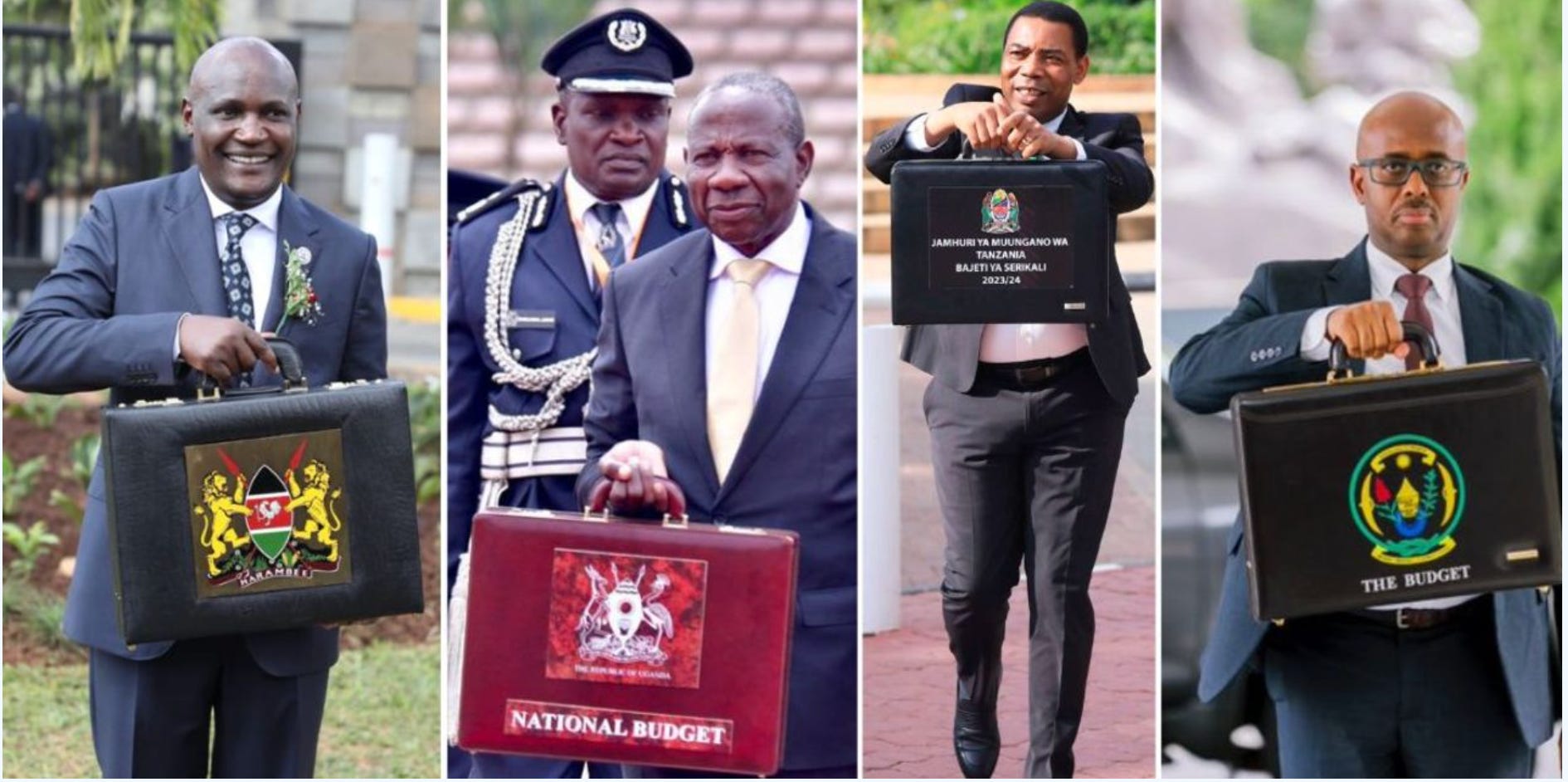
Every June, finance ministers across East Africa stand before Parliament to read national budgets. For many people, budget day sounds like a macroeconomic event: debt, deficits, infrastructure, inflation, revenue targets, and growth projections.
But for employers, payroll teams, HR leaders, CFOs, and compliance teams, budget day is much more than that.
It is the day governments often signal changes that affect what employees take home, what employers contribute, what payroll systems must calculate, and what compliance teams must report.
East Africa has a long-running practice of coordinating national budget readings. For FY2026/27, all eight EAC Partner States (Kenya, Uganda, Tanzania, Rwanda, Burundi, the Democratic Republic of Congo, Somalia, and South Sudan) are expected to read their budgets on 11 June 2026.
For regional employers, the practical East Africa payroll watchlist should include Ethiopia, Malawi, and Zambia, which may not all have the same June reading date, but they are part of the wider operating map for companies that employ people across Eastern and Southern Africa.
Why budget readings matter for payroll
A budget speech does not change payroll immediately, but often it signals a policy direction. The real change is contained in a Finance Bill, an Income Tax Amendment Bill, a Tax Procedures Bill, or a Social Security Amendment Bill. The proposals only become effective after Parliament passes them and the President signs them into law.
But payroll teams cannot wait until the last day.
A proposed change to PAYE bands, personal income tax thresholds, social security contributions, pension rates, training levies, housing levies, gratuity treatment, or withholding obligations can affect Employer cost, Payroll configuration, or, more generally, Cross-border cost planning.
That is why employers should track budgets not just as finance news, but as payroll-risk events.
What we are watching across East Africa
The biggest payroll-related proposal I have seen so far is in Uganda.
Uganda’s proposed PAYE changes would raise the monthly tax-free threshold from UGX 235,000(US$62) to UGX 335,000(US$89) per month. This is a meaningful relief for lower-income employees in Uganda.
There is also tax commentary pointing to a new PAYE band of UGX 410,000 (US$109) to UGX 485,000 (US$129) per month. High-income PAYE might also change, especially for amounts above UGX 10 million (US$2,652) per month.
In Kenya, the most notable payroll-related proposal is not a general PAYE band change but rather around the tax treatment of gratuity. The Finance Bill 2026 proposes clearer conditions for employer contributions or payments relating to gratuity to qualify for an employment income tax exemption.
For employers, this affects how end-of-service benefits are structured and how payroll teams determine whether gratuity contributions or payments are taxable or exempt.
In Somalia, the issue appears to be less about changing payroll rates and more about enforcement. Somalia’s budget policy documents point to stronger enforcement of payroll tax deduction at source by employers. That means the change may not be a new payroll formula, but tighter compliance expectations.
For Tanzania, Rwanda, Burundi, the DRC, and South Sudan, there are no proposed changes to PAYE or payroll rates in the June 2026 budget cycle. We will continue monitoring this.
For Ethiopia, Malawi, and Zambia, the budget calendar differs, but employers operating in the region should still monitor tax and payroll updates. We have documented most of the changes here.
Budget-reading months, employers should track
February: South Africa, Botswana, Namibia, Malawi
June: Kenya, Uganda, Tanzania, Rwanda, Burundi, DRC, Somalia, South Sudan, Ethiopia
September: Zambia
October to December: Ghana, Nigeria, Sierra Leone, Liberia, Zimbabwe, Morocco, Cameroon
What employers should do now?
Employers should maintain a payroll compliance calendar that tracks budget readings, Finance Bills, Tax Amendment Bills, presidential assent, effective dates, and implementation guidance issued by revenue authorities.
Below are some of the questions payroll teams could be asking:
Has the tax law changed, or is it still a proposal?
What is the effective date?
Does the change affect employees, employers, or both?
Is it a rate change, threshold change, exemption rule, contribution change, or enforcement change?
Does the payroll system need reconfiguration?
Do employees need to be notified before the next pay run?
This is especially important for companies operating across multiple African countries. A payroll change in one country may look small on paper, but when you manage hundreds or thousands of employees across borders, even small changes can quickly become operational risk.
What this means for Workpay customers
At Workpay, we are actively tracking these budget readings, draft Finance Bills, tax amendment proposals, and final enacted changes across the countries where our customers operate.
Our focus is not just on what is announced on budget day, but also on what eventually becomes law, when it takes effect, and how it affects payroll calculations, statutory deductions, employer contributions, payslips, and compliance reporting.
Where payroll rules change, we will review the final legal position, assess the payroll impact, update our systems where required, and guide customers on what the changes mean for their teams.
Payroll compliance across Africa is moving fast, but our customers should not have to track every budget speech on their own. That is part of the value of working with Workpay.
Changes are already happening in other parts of Africa.
The East African budget cycle is only one part of the story. Across the rest of Africa, several payroll and statutory changes have already taken effect in 2026.
In Nigeria, the 2026 tax reforms introduce a new personal income tax structure, a higher tax-free threshold, the removal of the old Consolidated Relief Allowance, new rent relief rules, changes to the treatment of employer-provided housing, and stronger employer compliance obligations. For payroll teams, this is not a minor update. It requires a rethink of payroll logic, employee relief documentation, and employer withholding controls.
In Angola, new personal income tax rates took effect from 1 January 2026. The monthly tax-exempt threshold increased to AOA 150,000, with a revised progressive tax table applying above that level.
In Botswana, the 2026 tax reforms increased the top individual marginal tax rate from 25% to 26.5%, affecting higher-income employees. The revised personal income tax table also retains a tax-free band up to BWP 48,000 annually.
In Malawi, new PAYE brackets took effect from 1 January 2026. The tax-free monthly threshold increased from MWK 150,000 to MWK 170,000, while higher-income employees are now subject to new upper bands, including a 40% top marginal rate for income above MWK 10 million per month.
In Zambia, the 2026 NAPSA earnings ceiling increased to ZMW 37,236 per month. With the statutory contribution rate remaining at 10%, shared equally between employer and employee, the maximum employee and employer contribution is now ZMW 1,861.80 each per month.
In Eswatini, the ENPF contribution ceiling increased effective 1 January 2026, raising the maximum employee contribution from E200 to E215 per month, with the employer matching the same amount.
In Morocco, payroll teams are also implementing 2026 changes, including an increase in the gross monthly SMIG minimum wage from MAD 3,266.55 to MAD 3,422.72, as well as an increase in family-related income tax relief for dependents.
For employers, payroll is no longer just an administrative process. It is a live compliance function. The companies that manage it well will avoid employee frustration, statutory penalties, and last-minute payroll chaos.
Those who do not will keep discovering that budget day is not just a government event.
It is a payroll event.